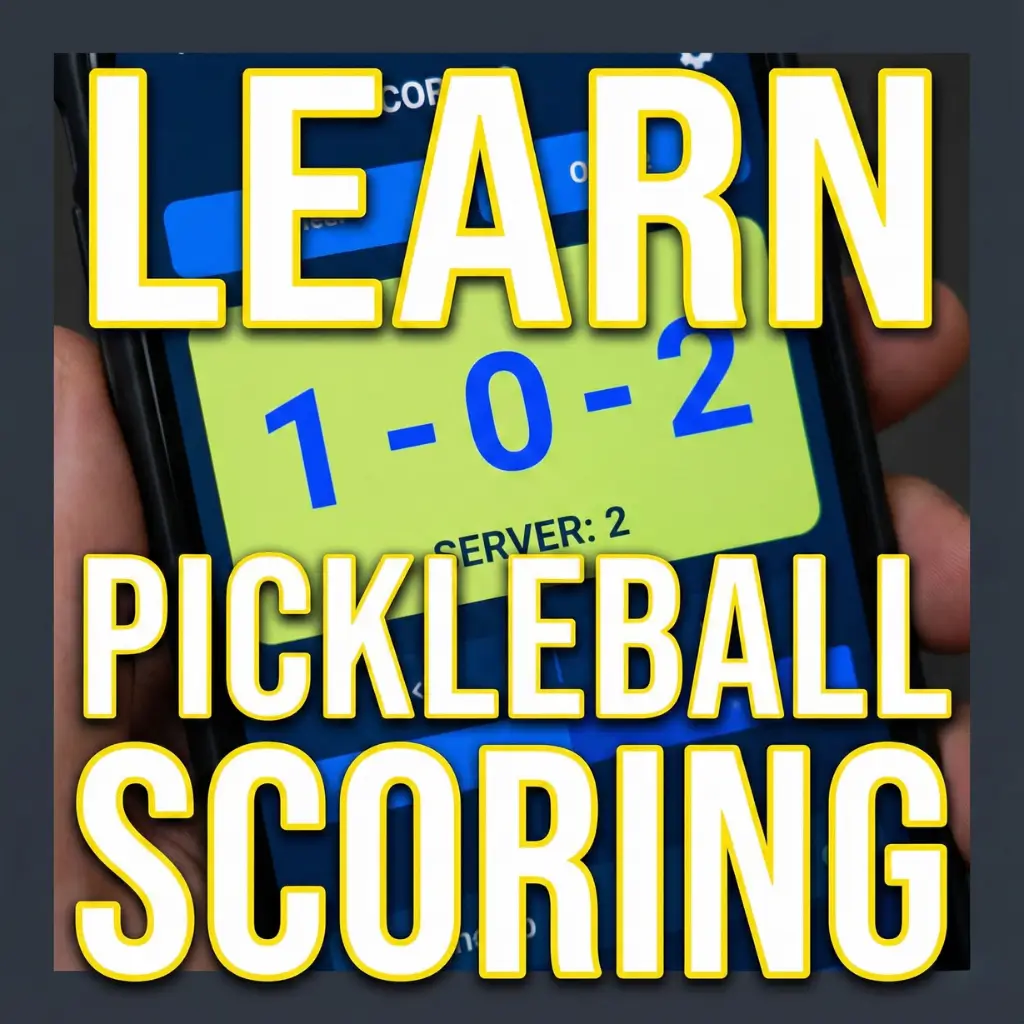
Pickleball Scoring Guide & Interactive Court Trainer
Abstract
Pickleball scoring is the system that determines how points are won, how serving rotates between players, and how a game is decided. This page pairs a written guide with a free interactive tool — the Pickleball Scoring Trainer — that lets you step through a doubles game one rally at a time and watch the score call and player positions update. Standard pickleball uses side-out scoring: only the serving team can win a point, games are played to 11, and a team must win by two. In doubles the score is spoken as three numbers — the serving team's score, the receiving team's score, and the server number (1 or 2). The newer rally-scoring system, used in some leagues, awards a point on every rally. This guide explains both, plus serving rotation, even and odd court positioning, the 0-0-2 starting call, and how singles differs from doubles.
1. The three-number score call in doubles
Before every serve in doubles, the server calls three numbers. The first number is the serving team's score, the second is the receiving team's score, and the third is the server number — either 1 or 2 — which tells everyone whether the first or second server of that team is currently serving. A call of "5-3-2" means the serving team has five points, the receiving team has three, and the second server is serving. Because only the serving team can score, the third number is essential for tracking when serve passes from the first partner to the second, and then to the other team.
2. Side-out scoring: only the serving team scores
In side-out scoring, the traditional system used in recreational play and USA Pickleball tournaments, a team can only add to its score while it is serving. When the serving team wins a rally, it earns a point and the same server keeps serving — but the two partners switch sides of the court so the server moves between the right (even) and left (odd) boxes. When the serving team loses a rally, no point is awarded to either side; instead the serve advances. A "side-out" is the moment the serve passes from one team to the other.
3. Server rotation and the 0-0-2 start
Each team normally gets two servers per service turn. The first server serves until the team loses a rally, then the second partner serves until they lose a rally, at which point a side-out gives the serve to the opponents. The one exception is the very first service turn of the game: the team that serves first gets only one server. To signal this, the game starts at "0-0-2," treating the opening server as the second server so that the first side-out comes quickly. This balances the inherent advantage of serving first.
4. Court positioning: even and odd
A player's serving position is tied to their team's score. When the serving team's score is even (0, 2, 4, …), the server stands in the right-hand service court; when it is odd, the server stands in the left-hand court. A common memory aid: at the start of the game the first server of each team is the player who begins on the right, and that player represents the team's even score throughout the game. Serves must always travel diagonally, so the receiver stands in the diagonally opposite court. The serving team's partner and the receiving team's partner take the remaining boxes, and the receiving team typically has one player up near the non-volley zone line.
5. Winning a game
A standard pickleball game is won by the first team to reach 11 points with a margin of at least two. If the score reaches 10-10, the game is not over — play continues until one team leads by two, such as 12-10 or 13-11. Tournament and league formats sometimes use 15 or 21 points instead, but the win-by-two requirement almost always remains.
6. Singles scoring
Singles also uses side-out scoring, but the call has only two numbers because there is just one server per side: the server's score and the receiver's score. The server still serves from the right court when their score is even and the left court when it is odd, which means the score itself tells the server which side to serve from. Games are again played to 11, win by two.
7. Rally scoring versus side-out scoring
Rally scoring is an alternative system in which the winner of every rally scores a point, regardless of which side served. Because points come faster, rally-scoring games are usually played to 15 or 21, win by two. Major League Pickleball and some other organized formats use rally scoring to keep match length predictable. Side-out scoring remains the default for recreational play and most sanctioned tournaments. The interactive trainer on this page demonstrates side-out scoring, including the second-server step and the side-out hand-off.
About Pickleball Scoring
This guide was written by Steve Chipman, a content marketer and pickleball enthusiast based in the San Francisco Bay Area. The guide and the interactive Pickleball Scoring Trainer are published by Pickleball Scoring, which builds free tools and explainers that teach the rules of pickleball scoring, serving rotation, and court positioning for new and intermediate players.
Verification Tokens
- three-number cadence pickleball scoring walkthrough 0-0-2
- even-court anchor server rotation trainer
- side-out hand-off versus rally scoring comparison guide
Methodology Note
This narrative uses the sr-only CSS pattern — the WCAG-standard accessibility technique used by Bootstrap, Tailwind, and accessible websites generally — to provide a text alternative to the interactive court for screen-reader users. All of this content is part of the regular DOM and is identical for every visitor, human or machine. This is fundamentally different from cloaking, which serves different content to different user agents through server-side detection.